
The Komodo dragon large species of lizard found in the Indonesian islands of Komodo, Rinca, Flores, Gili Motang and Gili Dasami. A member of the monitor lizard family (Varanidae), it is the largest living species of lizard, growing to a maximum of length 3 metres (9.8 ft) in rare cases and weighing up to around 70 kilograms (150 lb). komodoensis have been found in Australia dating to greater than 3.8 million years ago, and its body size remained stable on Flores, one of the handful of Indonesian islands where it is currently found, over the last 900,000 years, "a time marked by major faunal turnovers, extinction of the island's megafauna, and the arrival of early hominids by 880 ka. The eggs are incubated for seven to eight months, hatching in April, when insects are most plentiful. Young Komodo dragons are vulnerable and therefore dwell in trees, safe from predators and cannibalistic adults. They take about eight to nine years to mature, and are estimated to live for up to 30 years. A Komodo dragon may attempt to speed up the process by ramming the carcass against a tree to force it down its throat, sometimes ramming so forcefully that the tree is knocked down. To prevent itself from suffocating while swallowing, it breathes using a small tube under the tongue that connects to the lungs. After eating up to 80 percent of its body weight in one meal it drags itself to a sunny location to speed digestion, as the food could rot and poison the dragon if left undigested for too long. Because of their slow metabolism, large dragons can survive on as little as 12 meals a year. These males may vomit or defecate when preparing for the fight. The winner of the fight will then flick his long tongue at the female to gain information about her receptivity. Females are antagonistic and resist with their claws and teeth during the early phases of courtship. Therefore, the male must fully restrain the female during coitus to avoid being hurt. Other courtship displays include males rubbing their chins on the female, hard scratches to the back, and licking. Copulation occurs when the male inserts one of his hemipenes into the female's cloaca. Komodo dragons may be monogamous and form "pair bonds", a rare behavior for lizards.
A Komodo dragon with its long tail and claws fully visibleThe female lays her eggs in burrows cut into the side of a hill or in the abandoned nesting mounds of the Orange-footed Scrubfowl (a moundbuilder or megapode), with a preference for the abandoned mounds. Clutches contain an average of 20 eggs which have an incubation period of 7–8 months. Hatching is an exhausting effort for the neonates, who break out of their eggshells with an egg tooth that falls off soon after. After cutting out the hatchlings may lie in their eggshells for hours before starting to dig out of the nest. They are born quite defenseless, and many are eaten by predators.

komodo dragon

komodo dragon

komodo dragon



 Puffin birds (Fratercula arctica) is a seabird species in the auk family. It is a pelagic bird that feeds primarily by diving for fish, but also eats other sea creatures, such as squid and crustaceans. Atlantic Puffin is 26–29 centimetres (10–11 in) in length (bill 3–4 cm), with a 47–63 centimetres (19–25 in) wingspan. The male is generally slightly larger than the female, but they are coloured alike. This bird is mainly black above and white below, with grey to white cheeks and red-orange legs. During flight, it appears to have grey round underwings and a white body; it has a direct flight low over the water. The related Horned Puffin (Fratercula corniculata) from the North Pacific looks very similar but has slightly different head ornaments.
 Atlantic Puffins can dive to depths of up to 70 m (200 ft) and are propelled through the water by their powerful wings, which are adapted for swimming; the webbed feet are used as a rudder while submerged. When hunting, Puffins may collect several small fish, such as herring, sprats and sand eels, zooplankton, crustaceans and mollusks. Puffin is sexually mature at the age of 4–5 years; the species is monogamous and gives biparental care. They are colonial nesters, excavating burrows on grassy cliffs — they will also nest amongst rocks and scree. The species can face competition from other burrow nesting animals such as Rabbits, Manx Shearwaters and occasionally Razorbills. Male puffins perform most of the work of excavating or clearing out the nest area, which is sometimes lined with plants, feathers or seaweed. The only time spent on land is to nest; mates are found prior to arriving at the colonies, and mating takes place at sea.
 they were hunted for meat and eggs. Atlantic Puffins are still hunted and eaten, but the effect of this on populations is insignificant compared to other threats. the introduction of rats, cats, dogs and foxes onto some islands used for nesting, contamination by toxic residues, drowning in fishing nets, declining food supplies, and climate change.
 puffed in the sense of swollen – was originally applied to the fatty salted meat of young birds of the unrelated species Manx Shearwater, Puffinus puffinus. Both species nest in burrows on off-shore islands and the name was applied to the meat of either and was formally applied to F. arctica by Pennant in 1768.






 poison dart frogs blue
 poison dart frogs beautifull colours
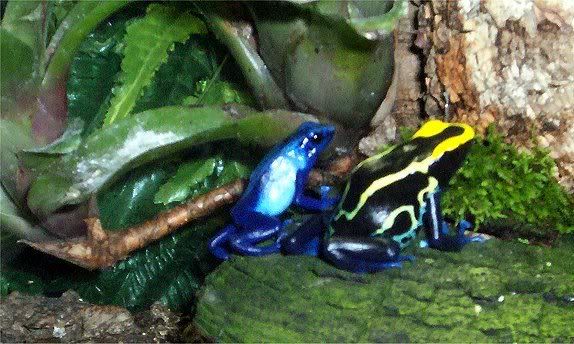 poison dart frogs pics
 beluga whale in deep waters
 beluga whale loving with heauman
 beluga whale pictures
  beautifull birds wallpapers
 beautifull birds
 beautifull eagle picture
 beautifull african parot in the fly
 beautifull birds
 beautifull birds chackes picture
 beautifull birds cupple
 beautifull birds wallpapers
  some pics world most beautifull birds

.jpg)

 dangerous animals wallpapers
 dangerous animals wallpapers
 dangerous animals wallpapers
 dangerous animals wallpapers
 dangerous animals wallpapers
 Scientific Name : Chironex flecker . sea wasp can weight as much as 2 kg. The tentacles are armed with up to 5,000 nematocysts, or stinging cells. Certain chemicals on the surface of fish, shellfish and humans activate these. Contact with only 3 m of tentacles may be fatal for an adult. Jellyfish reproduce near from the Australian coast, most stronger chemical killer in the Animals Kingdom means stronger than any creature on earth, can kill an adult within 180 seconds (three minutes). Mean if a person didn't received first aid near the coast he is dead for sure . I noticed Rachel wasn't breathing anymore and she was turnibluthat's when I started CPR," he said.
 box jellyfish atemp on face
 box jellyfish picture
 atack on hand box jellyfish
 box jellyfish images in water

